
September Inflation and Retail Sales Data, AI Financing, and Bank Earnings

Photo Credit: Laura Adai, Unsplash
Weekly Market Recap for October 16th
Markets were mixed this week, with technology and growth stocks declining while value and defensive sectors traded higher. The S&P 500 fell -0.3%, the Nasdaq declined -2.6%, and the Russell 2000 small-cap index returned -1.0%. However, the Equal-Weight S&P 500 gained +1.3%, while Value (+1.6%) outperformed Growth (-2.3%), signaling broader participation and a rotation beneath the major indexes. Health Care (+5.6%) and Consumer Staples (+3.9%) led, with nine of the eleven S&P 500 sectors higher, while Technology (-4.4%) significantly underperformed. Bonds rallied as Treasury yields fell, with longer-maturity Treasuries up 2.7%. Investment-grade corporate bonds (+1.0%) outperformed high-yield bonds, which were flat as credit spreads widened. Oil rose +6.8%, while the U.S. dollar and Bitcoin were little changed.
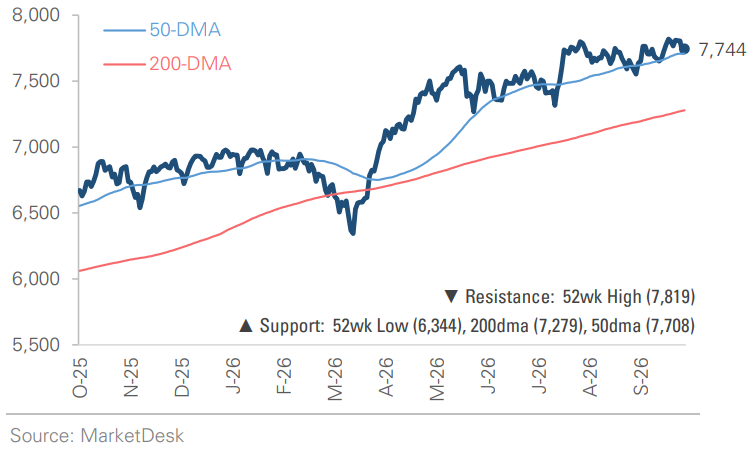
S&P 500 Index (Last 12 Months)
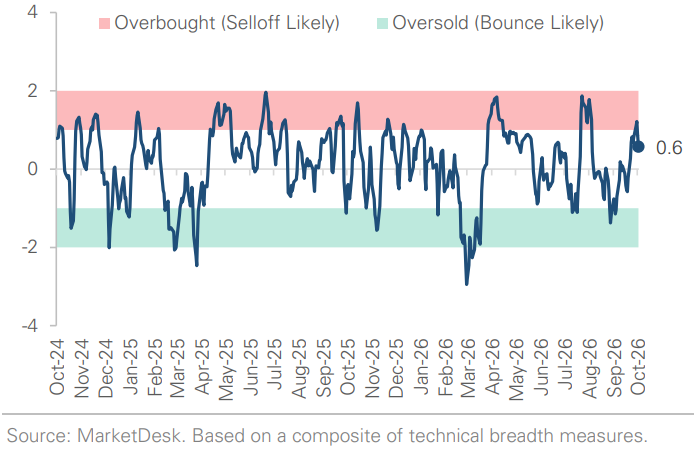
S&P 500 Technical Composite (Last 24 Months)
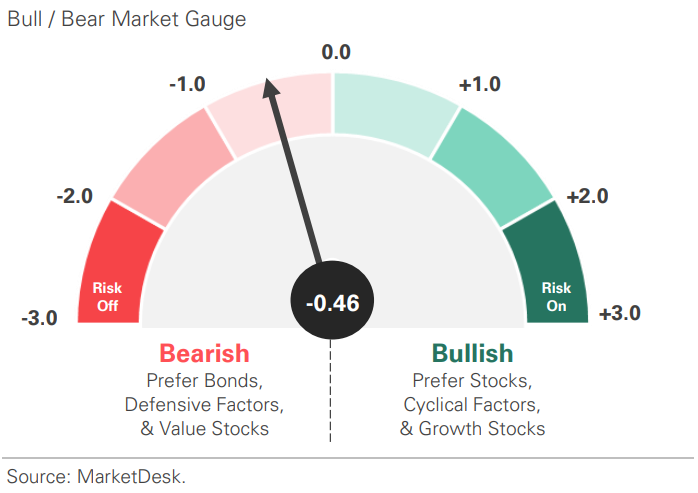
US Risk Demand Market Indicator
The US Risk Demand Indicator (USRDI) is a quantitative tool to measure real-time investor risk appetite. When the indicator is above zero, it signals a risk-on environment favoring cyclical sectors, high-beta stocks, high-yield corporate bonds, and hybrid (convertible) bonds. In contrast, a reading below zero signals a risk-off environment favoring defensive sectors, low-volatility stocks, and US Treasury bonds.
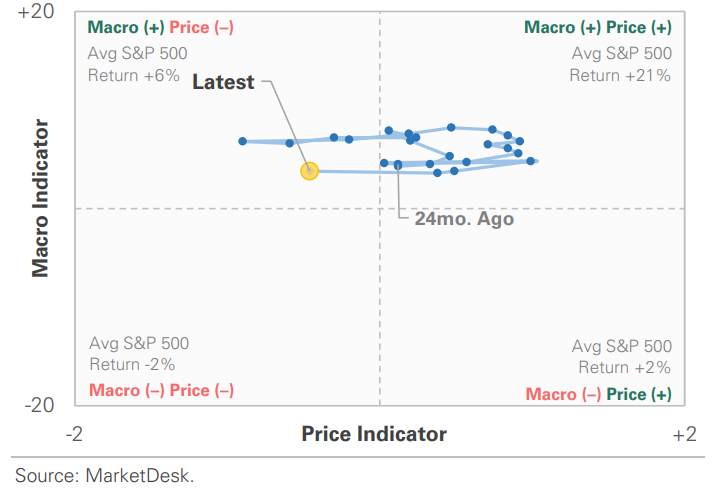
US Market Economic Cycle Indicator
The Market Cycle Indicator tracks two primary investor groups: macro investors and price-based investors. Macro investors rely on fundamental and economic data to guide their decisions, while price-based investors (or technical analysts) focus on price action, momentum, volume, and behavioral trends. The Indicator synthesizes these perspectives to identify the prevailing market regime.
S&P 500 Valuation Matrix
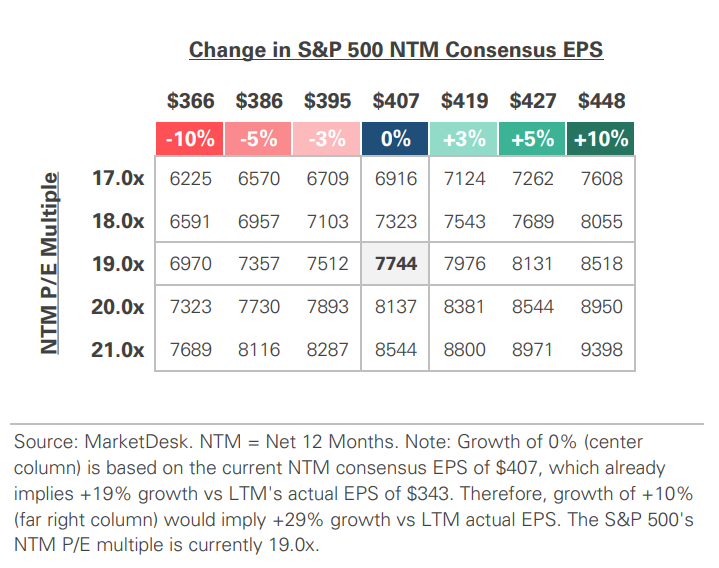
S&P 500 Forward PE Ratio
The S&P 500 forward price-to-earnings (P/E) ratio is a widely followed valuation metric that compares the index's current level to the projected earnings of its constituent companies over the next 12 months. The indicator implies to investors how much they are paying today for each dollar of expected future earnings.
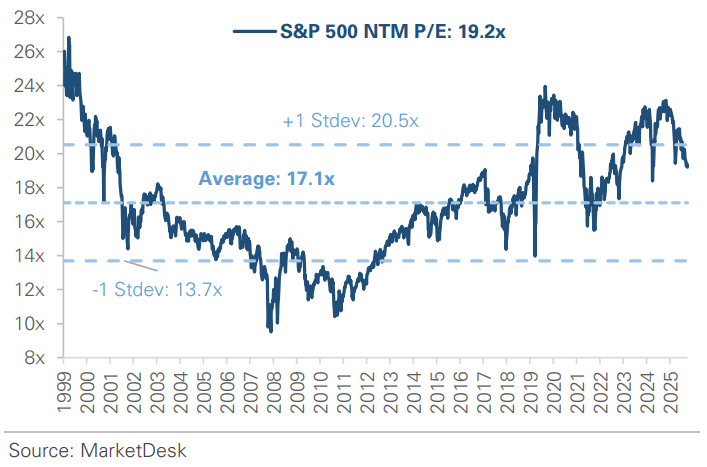
Key Takeaways
#1 - Inflation Accelerated in September
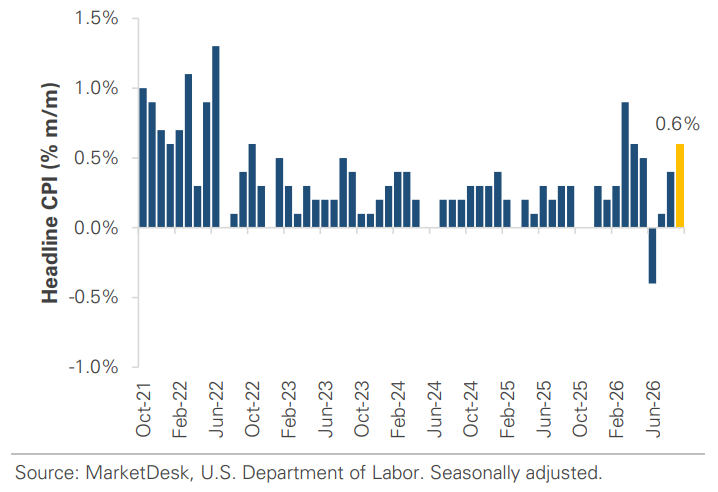
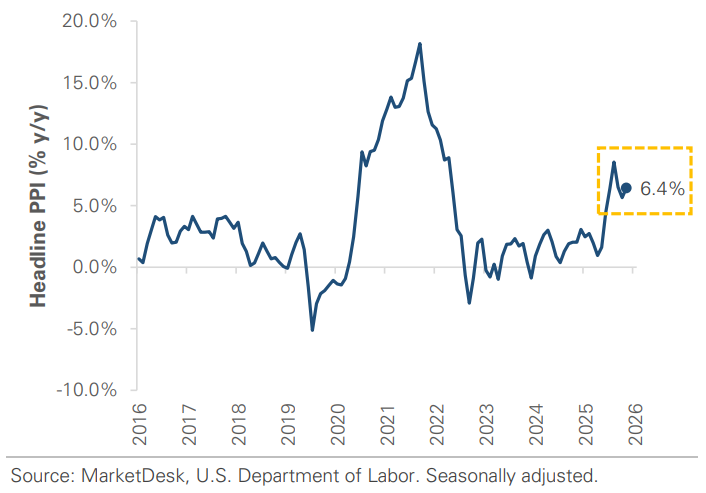
Inflation accelerated in September, driven by rising energy prices and continued underlying price pressures. The Consumer Price Index (CPI) rose +0.6% in September, with year-over-year inflation up from +3.4% in August to +3.7%. Gasoline prices jumped +9.1% month-over-month, accounting for more than half the monthly increase. Underlying inflation also firmed, with core CPI (excluding food and energy) rising +0.3%, slightly above expectations. Separate data showed producer prices rose +1.3% month-over-month in September, their largest monthly gain since March 2022, reflecting rising energy costs and broader price pressures.
Implication: Persistent inflation and slower hiring complicate the Federal Reserve’s efforts to balance price stability with economic growth.
Consumer Price Inflation Accelerates
Producer Price Inflation Remains Elevated
#2 - Consumer Spending Increases
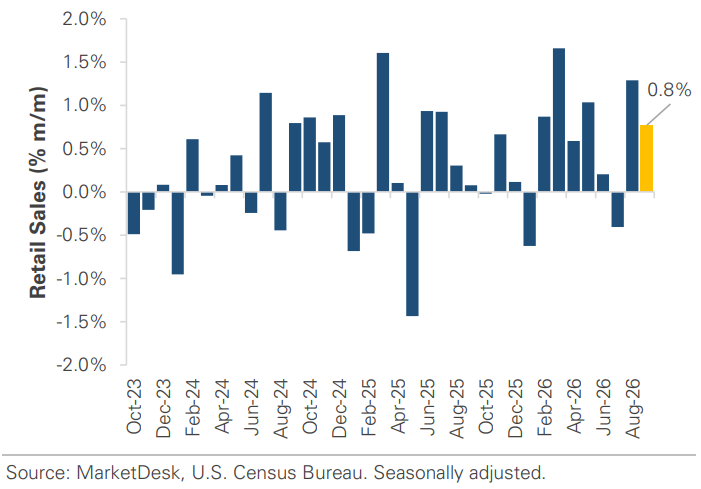
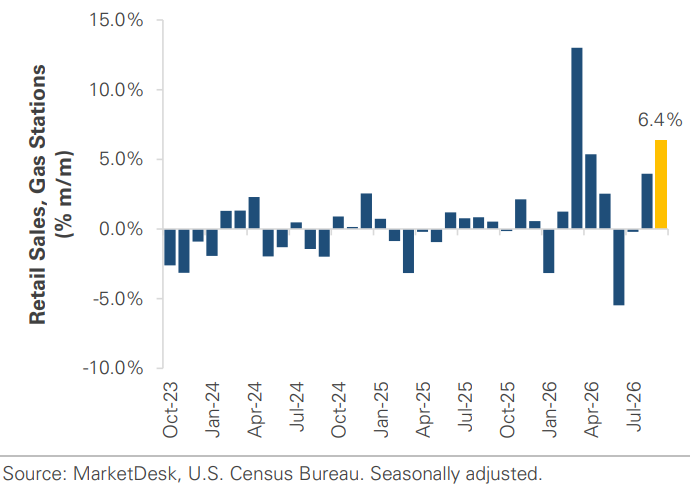
Consumer spending increased more than expected in September. Retail sales rose 0.8% month-over-month, exceeding expectations of 0.3%, and August's increase was also revised higher to 1.3%. However, September’s strength partly reflected higher gasoline prices. Because retail sales aren’t adjusted for inflation, higher fuel prices can boost reported spending. This was especially evident in September, when gasoline station sales rose +6.4%. Excluding gas stations, retail sales rose +0.2%. Separately, spending at restaurants and other retailers remained positive, suggesting consumers kept buying despite higher costs.
Implication: The report points to continued consumer spending, although growth outside gasoline stations was more modest than the headline suggested.
Consumer Spending Beats Expectations
Driven Partly By Rising Gasoline Prices
#3 - Investors Question AI Debt Financing
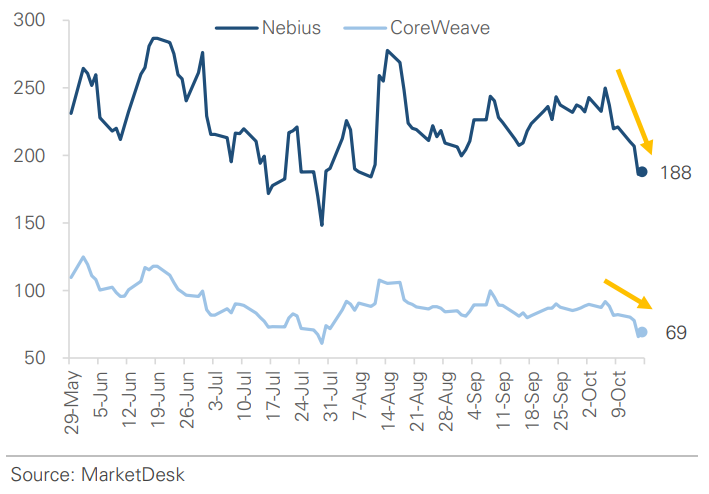
Investors are increasingly questioning the debt financing behind the AI infrastructure boom. Shares of AI-related companies fell sharply this week as investors grew more concerned about the heavy borrowing funding the AI infrastructure boom. CoreWeave, a major provider of AI computing capacity, fell roughly 15% on Wednesday as yields on some of its bonds approached 15%, a sign investors are demanding much higher compensation to lend to the company. Building AI infrastructure requires enormous upfront spending on data centers, specialized chips, and electricity, and some companies have borrowed heavily to fund expansion. The sell-off occurred despite strong semiconductor earnings.
Implication: Demand for AI computing and infrastructure remains strong, but higher borrowing costs have increased scrutiny of how companies are funding their infrastructure spending.
Leverage Concerns Weigh on AI Cloud Providers
#4 - Major Bank Earnings Prove US Economy Remains Resilient
Major-bank earnings further show the U.S. economy remains relatively resilient. Third-quarter results showed continued growth in credit and debit card spending, further evidence that consumers stayed active. Credit quality also held up relatively well, with borrowers generally keeping up with their payments and loan losses remaining contained despite rising interest rates. Bank leaders said consumers and businesses held up well, while acknowledging challenges from inflation and higher borrowing costs.
Implication: Taken together, the bank results suggest that consumers and businesses remain relatively resilient despite higher interest rates, elevated oil prices, and persistent inflation.
Chart
Important Disclosures
This material is provided for general and educational purposes only and is not investment advice. Your investments should correspond to your financial needs, goals, and risk tolerance. Please consult an investment professional before making any investment or financial decisions or purchasing any financial, securities, or investment-related service or product, including any investment product or service described in these materials.
Our Insights